Recipes
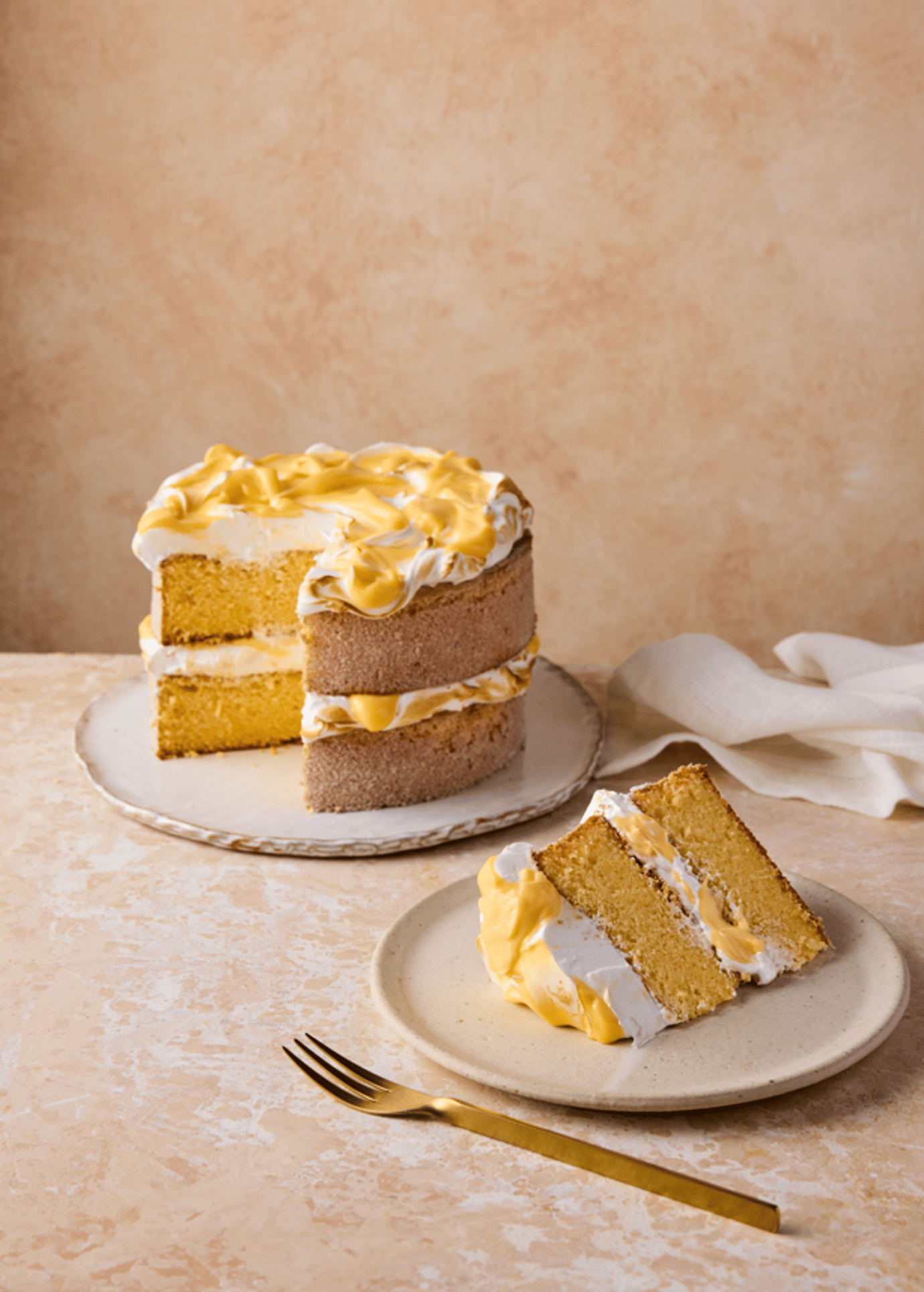
Lemon meringue cake
2 hour 30 minutes Preparation time
40 minutes Cooking time
10 Serves
Ingredients
Lemon cake
215 g cake flour
70 g caster sugar (A)
¾ tps (3 g) baking powder
¼ tsp salt
2 lemons, zested
160 g egg yolks (approx. 8 eggs)
115 g grapeseed oil
115 ml water
1 tsp vanilla bean paste
140 g egg whites, room temperature (approx. 5 eggs)
145 g caster sugar (B)
100 g caster sugar (C), for rolling
Lemon curd
2 g gold gelatine sheets, or 1 individual gelatine sheet
2 lemons, zested
90 g caster sugar
60 g whole eggs
60 g egg yolks (approx. 3 eggs)
110 g fresh lemon juice
130 g unsalted butter, room temperature and cubed
Italian meringue
55 ml water
215 g caster sugar
110 g egg whites (approx. 4 eggs)
Pinch of cream of tartar
Method
Lemon cake
- Create baking paper bases for two 18 cm cake rings and secure them with foil, then place onto a baking tray and set aside until required.
- Preheat the oven on Fan Plus at 160°C.
- Sieve the cake flour, sugar (A), baking powder, and salt into a bowl, add the lemon zest and set aside until required.
- Place the egg yolks into the bowl of a freestanding mixer fitted with a whisk attachment and whisk on high speed until they have tripled in volume.
- Stream the oil into the egg yolks while continuing to whisk to emulsify.
- Remove from the mixer, add the water and vanilla, and mix by hand to combine.
- Place the room temperature egg whites into a clean freestanding mixer bowl fitted with a clean whisk attachment and whisk on medium speed.
- Once the egg whites begin to aerate, gradually add the sugar (B) a spoonful at a time over approximately 5 minutes.
- Once the sugar (B) is added, continue to whisk for a further 5 minutes to ensure the sugar dissolves and the meringue reaches a medium peak.
- Transfer the yolk mixture into a large bowl to give yourself plenty of room for folding. Gently fold in one-third of the meringue. Add one-third of the dry ingredients and fold gently. It doesn't need to be perfectly mixed before adding the next amount. Fold in the second third of the meringue, then the second third of the dry ingredients. Finish by folding in the last third of the meringue until no streaks remain. This method of mixing allows retention of as much volume as possible and minimises clumping.
- Evenly divide the batter between the two prepared cake rings.
- Bake in the preheated oven for 35-40 minutes, until a skewer is inserted in the centre and comes out clean.
- Remove from the oven, place a sheet of baking paper and a tray on top of the cake, then carefully flip the cake over. Allow to cool upside down for 30 minutes prior to removing the baking paper and foil.
- Run a knife around the rings to release the cakes.
- Once cool enough to handle, but still warm, roll the sides of the cakes in the sugar (C), then allow to cool completely at room temperature.
Lemon curd
- Soak the gelatine in a bowl of cold water. Once soft and pliable, gently squeeze to remove any excess water, then set aside until required.
- Place the lemon zest, sugar, whole egg, and egg yolk into a bowl and whisk by hand to combine.
- Place the lemon juice into a saucepan on medium-high heat, induction setting 7, and bring to a boil.
- Pour approximately one third of the hot lemon juice over the egg mixture and whisk to combine. In two additions, pour in the remaining hot lemon juice and whisk.
- Transfer the mixture back into the saucepan and whisk continuously on medium heat, induction setting 6, until it starts to thicken.
- Pass the lemon curd through a fine sieve, then add the pre-soaked gelatine and mix until dissolved and incorporated.
- Lastly, add the room temperature butter a cube at a time and emulsify with a stick blender.
- Transfer into a clean bowl and cover the surface of the curd with cling wrap.
- Chill in the fridge for a minimum of 2-3 hours.
Italian meringue
- Once ready to assemble the cake, prepare the Italian meringue.
- Place the water and sugar into a saucepan on medium heat, induction setting 5, and bring to a boil.
- Meanwhile, place the egg whites and cream of tartar into the bowl of a freestanding mixer fitted with a whisk attachment.
- Once the syrup reaches 110°C, begin whisking the egg whites on medium speed.
- When the syrup reaches 117°C, slowly stream it down the side of the bowl and into the egg whites while continuing to whisk, careful that it doesn’t hit the whisk attachment.
- Increase the speed to high and continue whisking until the meringue cools to room temperature.
- Assemble immediately.
Assembly
- Place one of the prepared lemon cakes onto a serving plate, top with half of the Italian meringue, and spread it out leaving a border of approximately 5 mm around the edge.
- Dollop approximately half of the lemon curd over the meringue and rustically swirl it through with a spoon.
- Place the second lemon cake on top and gently press it down slightly.
- Repeat with the remaining meringue and lemon curd.
- Use a kitchen blow torch to lightly toast the meringue on top.
Hints and tips
- Store the cake for up to 3-5 days in the fridge.
- The lemon curd can also be cooked in the speed oven. Cook on Microwave at 300W for 9 minutes, stirring at 4 minutes. Whisk until smooth, return to cook for the remaining time, then whisk again. If needed, cook 2 minutes more until thick with a slight wobble. Continue from step 6.
- Meyer lemons have the best flavour if you have a choice of lemons.
Applicance Functions
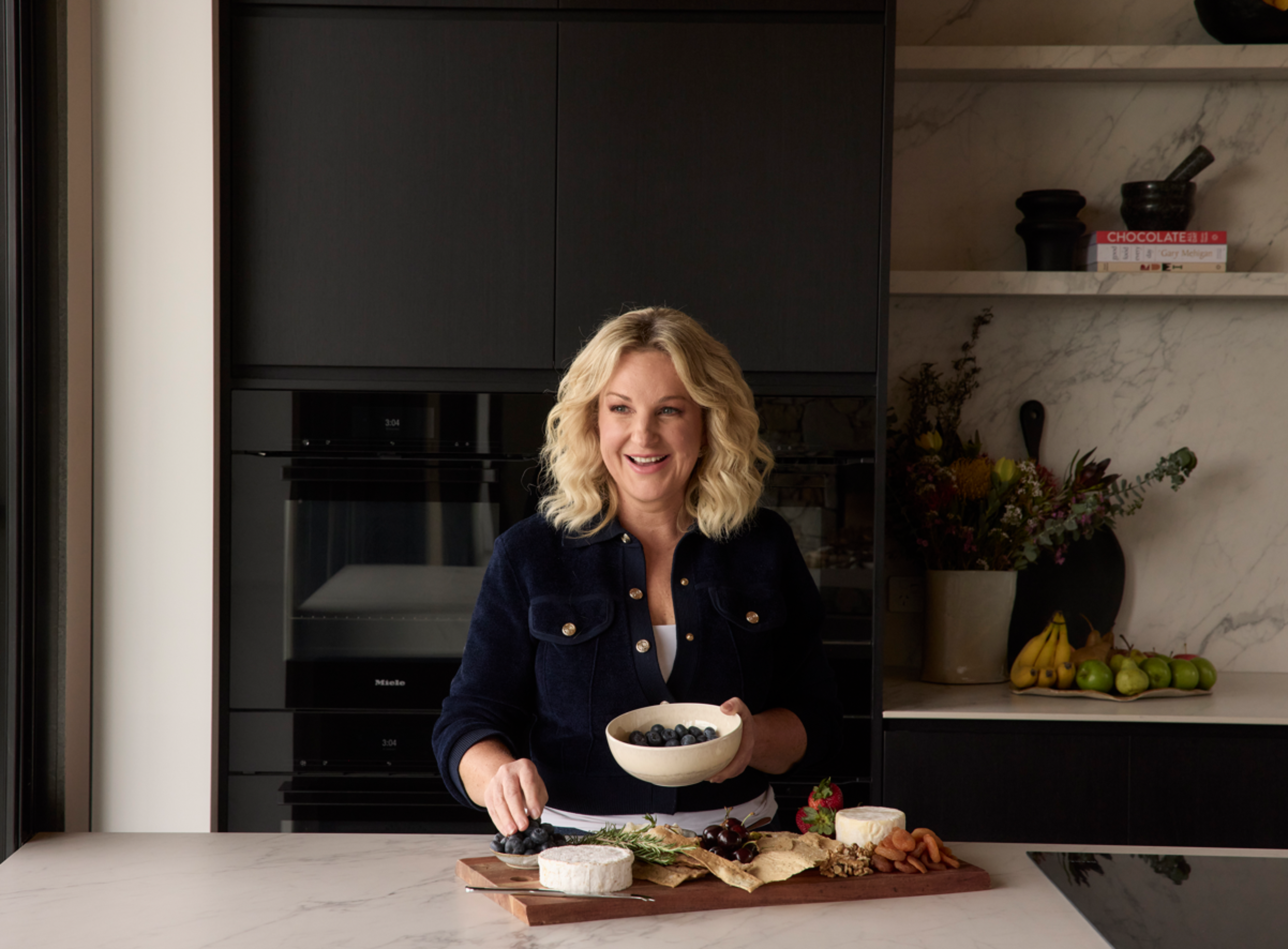
Kirsten Tibballs
Kirsten Tibballs, proclaimed by MasterChef Australia as ‘the Queen of Chocolate’, is one of Australia’s most celebrated and internationally respected pastry chefs and chocolatiers.
With a desire to pass on her knowledge to other passionate food lovers and professional pastry chefs, Kirsten established Savour Chocolate & Patisserie School in 2002 in Brunswick, Melbourne. Savour creates an opportunity for students to learn from and work alongside their award-winning chefs. It boasts a state of the art kitchen and hosts a number of renowned international pastry chefs each year.